
The instability of imported energy is no longer a tail risk. It is a portfolio question.
Iran closed the Strait of Hormuz in early March, and within days, traffic through the world’s most consequential maritime chokepoint had fallen to roughly five per cent of its pre-crisis average. The IEA called it the largest disruption in the history of the global oil market.
The economy felt it within weeks. Brent crude moved from under seventy dollars a barrel to above ninety. Liquefied natural gas exports from Qatar and the UAE, which account for almost a fifth of global LNG trade, were stranded in the Gulf, with no alternative export route available. More than fifteen hundred commercial vessels remain in the region as of writing, carrying around twenty-two thousand people.
The question this raises is not a narrow geopolitical one; it is an allocational one. Every portfolio with long-dated exposure to fossil-fuel logistics has now been shown — in operational terms — what the cost of that exposure looks like when the optimistic assumption fails.
Energy systems that depend on a single waterway carry a concentration risk that no contract, insurer, or government could fully price.
A Chokepoint Hiding in Plain Sight
Roughly a quarter of all seaborne oil and a fifth of all LNG had moved through a twenty-one-mile strait. The figure was published in every EIA bulletin and every infrastructure briefing. It was not hidden.
What was hidden was the cost of treating the exposure as remote. For thirty years, the assumption held that the Strait would stay open because closing it would punish too many parties at once. The assumption quietly failed in February. Every imported-energy system has a Strait of its own — a pipeline, a port, a transformer farm, a single jurisdiction controlling a flow that no allocator can replace at short notice.
The Architecture of Imported Energy
Fossil-fuel economies are built around movement. Oil and gas are concentrated in areas that do not align with consumption patterns. The plumbing that closes the gap — tankers, terminals, pipelines, refineries — has to cross borders that allocators do not control.
This is the part of the system that does not appear on a price chart. Crude is fungible. The route by which a barrel arrives is not. Hormuz reminded markets that the route is the asset, and the asset can be removed without warning. The World Economic Forum’s 2026 Global Risks Report makes the same point in a different language: geo-economic confrontation is now treated as a permanent input to industrial planning, not a passing shock.
Where Generation Sits Inside the Border
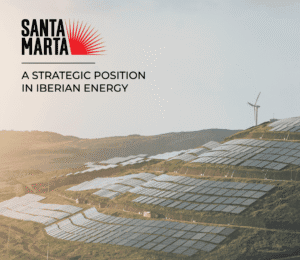
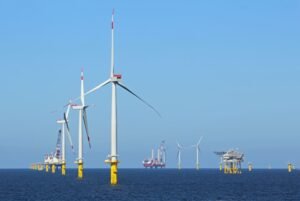
Renewable infrastructure has a different geometry. A solar array, a wind farm, a battery storage site — these sit inside the country that consumes their output. The fuel arrives free every day. It does not matter who controls a shipping lane two thousand miles away.
This is the point most often missed in the energy-transition conversation. The argument for domestic generation is not primarily environmental, though that environmental case is well-rehearsed and accepted across institutional capital. It is a balance-sheet question. Imported energy carries exposure offshore, within another country’s foreign policy and another government’s chokepoint, where no allocator can accurately price it. Domestic generation does the opposite. The risk falls within the assets that capital owns directly.
This principle underpins the investment thesis behind Solar45 and Baloiço — assets that sit inside the border, generating output from resources that need nothing across a shipping lane to operate.
Capital Has Already Started Moving
Institutional allocators were repositioning before March. What the conflict has done is compress the timeline that was already in motion. Sovereign wealth and pension funds with long-dated liabilities have been adding to renewable infrastructure positions for several years, frequently at the expense of upstream fossil exposure.
The reasons are practical. Renewable assets earn revenue from contracts denominated in domestic currency, settled inside domestic jurisdictions, on equipment that does not need to clear a foreign border. Those contracts run fifteen, twenty, sometimes thirty years — the same horizon as the liabilities those institutions carry. That fit is the heart of the case.
For a deeper look at how battery storage sits within this thesis, see From Barrel Risk to Megawatt Certainty.
The Repricing Has Already Started
Markets repriced Brent within hours of the closure. They are still repricing energy infrastructure below the surface of the daily price action. Long-haul fossil logistics, the older asset class, is being marked down for risks that were always present but rarely paid for. Domestic renewables, storage, and grid durability — the newer ones — are being marked up.
This is how repricing usually works. An exposure that has been visible for years is priced as remote, until an event makes it acute. The new price holds. Whether the Strait reopens in three months or in thirty, the assumption that imported energy is a frictionless input has been retired.
For private capital, the implication is not a directional bet on a single technology or geography. It is a slower question. Which assets sit inside the border, which assets do not, and which portfolios have been built on assumptions that the last three months have invalidated — these are the questions long-dated allocators are answering now.
Univere Investment Solutions designs the access architecture through which qualified capital reaches the infrastructure of this kind. This work sits upstream of the asset and is, by definition, selective — the population of investors capable of holding a 20-year exposure to private infrastructure is finite. Hormuz has not changed what Univere builds. What Hormuz has changed is the extent to which the case for it is now understood.
Professional access only. Not for public or retail audiences. Univere Investment Solutions Limited is not authorised or regulated by the Financial Conduct Authority. This content does not constitute a financial promotion, financial advice, or an invitation or inducement to engage in investment activity. Past performance is not indicative of future results. Capital is at risk.