
- Sector Ventures
Battery Energy Storage Investment
At Univere, we introduce qualifying certified and self-certified investors to battery energy storage investment opportunities through bonds and secured loan notes structured by trusted third parties. Access is subject to eligibility requirements and applicable regulations.
originated and delivered
and market experience
value across strategies
global markets
What Battery Energy Storage Systems (BESS) Are & Why They Matter
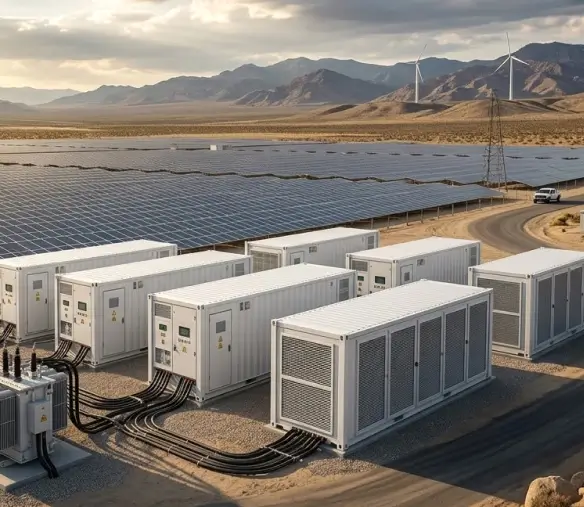
Battery energy storage systems are physical infrastructure assets positioned between renewable generation and grid delivery, storing electricity and then releasing it on demand. They address a key challenge associated with solar and wind assets: the gap between when power is generated and when it’s needed.
Without storage, surplus generation is either curtailed or sold at low market prices during off-peak periods. With a co-located or grid-connected battery system, that electricity is held and dispatched when grid operators need it most, at periods of peak demand or contingency events.
How Battery Storage Projects Generate Value
Battery energy storage operates within defined regulatory and commercial frameworks that create revenue potential. At Univere Investment Solutions, we introduce qualifying investors to bonds and secured loan notes with large-scale battery storage infrastructure as underlying assets. This enables eligible investors to gain exposure to these assets at an earlier stage than public-market access typically allows.
Each product is built around assets with defined project economics, including:
Planning consents
Grid connection agreements
Revenue contracts
These opportunities are available to certified and self-certified high-net-worth individuals (HNWIs), ultra-high-net-worth individuals (UHNWIs), sophisticated investors, family offices and regulated advisors who meet the eligibility criteria.
Univere’s product selection focuses on assets positioned to benefit from multiple revenue streams rather than single-channel dependency. Battery energy storage solutions generate revenue through several distinct streams, including:
Capacity market contracts: Payments for maintaining sufficient capacity availability, ensuring the grid can meet peak demand at any point
Ancillary services: Payments for grid stability services, including frequency response, which involves rapid charge and discharge cycles that keep the grid operating within safe limits
Wholesale market trading: Buying electricity when supply exceeds demand and prices are low, then selling when demand rises and prices increase
Front-of-the-meter services: Revenue from large-scale, grid-connected assets that provide balancing, frequency and capacity services directly to transmission and distribution network operators
Projects with multiple revenue sources may offer a more diversified income profile. However, performance depends on project execution, market conditions and contractual arrangements, and returns aren’t guaranteed.
Behind-the-Meter Storage
Behind-the-meter battery storage refers to systems installed on the consumer side of the electricity meter, typically at industrial or commercial sites. These systems reduce peak demand charges, provide backup power during outages and allow large energy consumers to manage their electricity costs more efficiently. Performance is linked to energy consumption patterns rather than wholesale market prices. Across both models, the function is to support a stable grid through flexible dispatch.
Energy Storage, Market Trends & the Energy Transition
The energy storage market is experiencing rapid growth because the energy transition demands it. As renewables replace fossil fuels, power systems need more dispatchable capacity to balance supply and demand while maintaining grid reliability.
The table below sets out the key differences between conventional renewable energy assets and grid-scale battery storage:
Solar/wind generation | Battery energy storage | |
Primary function | Generate electricity | Store and dispatch electricity |
Revenue timing | Generation-dependent | Demand and market-driven |
Grid role | Renewable generation | Grid stability, ancillary services |
Co-location | Often standalone | Frequently co-located with solar or wind |
Revenue certainty | Weather-dependent | Multiple revenue streams (contracted and market-based) |
Asset life | 20-30 years | 10-20 years (battery systems) |
Lithium-ion batteries are the dominant technology in large-scale battery storage today. They’ve been widely deployed across commercial projects, with established supply chains and a strong track record across grid-scale applications.
Arrange a call to discuss battery energy storage opportunities with our team.
Clean Energy Infrastructure as a Private Investment
Clean energy infrastructure, including battery storage, has become a recognized private market investment. The characteristics that define it include:
Long-duration contracts
Physical asset security
Revenue tied to essential services
Climate Change & the Policy Environment
Climate change policy is a structural driver of governmental commitments across North America, Europe and beyond, with requirements to make renewable generation reliable at scale. As a result, the policy environment creates demand for battery storage projects that is independent of short-term market dynamics. In investing, that policy-driven demand translates into a financing case built on durable fundamentals rather than market timing.
Battery Storage Project Financing
Battery storage project financing is asset-led. The project generates contracted revenue, and the financial instrument, structured by a trusted third-party issuer, is built around it, with terms covering:
Construction timeline
Operation phase
Expected revenue profile
Exit route
At Univere, we introduce and distribute bonds and secured loan notes, with capital secured against underlying battery energy storage projects. This security relates to the assets backing the investment and doesn’t guarantee the return of capital, which remains at risk. The appointed third-party fund manager remains accountable for all aspects of the project’s operation and management.
Investors introduced through Univere have accessed structures, including the SantaMarta60 bond, Frankfurt-listed, which paid investors 20% per annum and was redeemed in full in December 2025. That result was delivered against real infrastructure assets in Portugal across a three-year term, with a total of 60% return on investment (ROI). Nevertheless, past performance doesn’t secure future results, and capital remains at risk across all structured products.
FAQs About Battery Energy Storage Investments
The questions below address the most common points raised during initial enquiries. Product terms, project-specific documents and offering materials are available only after certification or self-certification is complete. This is a regulatory requirement under UK financial promotion rules.
01
Where does battery energy storage fit within Univere's broader platform?
Battery energy storage sits within our renewable energy sector, alongside solar investments and Portugal’s renewable energy projects. It’s part of a wider portfolio that spans healthcare, film finance, and specialist assets, including innovation as well as critical infrastructure and national resilience technology.
Each product is structured separately by the relevant third party, with access requiring certification or self-certification as a qualifying investor. Eligible investors can access the full range of sectors available through the platform within a single relationship with us.
02
What is the difference between co-located and standalone battery storage systems?
The key differences between co-located and standalone battery storage systems are as follows:
Co-located battery storage sits alongside a solar or wind generation asset, sharing grid connection infrastructure while capturing additional value by storing surplus generation from the paired renewable source.
Standalone battery storage projects operate independently, drawing from and delivering to the wider grid.
Our battery storage products include assets across both energy systems, selected on the basis of their project economics and revenue profile.
03
How does battery storage relate to virtual power plants?
A virtual power plant (VPP) is a network of distributed energy assets, including battery storage systems, managed through software to operate as a single dispatchable unit. Large-scale battery storage assets can participate in VPP arrangements, providing grid services collectively with other assets.
This is one of the more technically advanced applications of battery storage in the energy market. It’s relevant to investors because it represents an additional potential revenue channel for assets with the right grid connection and control systems in place.
04
How does a battery storage project ensure sufficient capacity availability?
Capacity availability is managed through the system’s:
Design specifications
Monitoring protocols
Asset management practices
Projects with capacity market contracts are subject to testing and availability requirements set by grid operators. Financial penalties apply to projects that fail to meet the relevant standards; this makes asset management quality a critical factor in project selection. At Univere, our development phase includes examining asset management credentials, track records and governance structures.
05
What risks are specific to battery energy storage investments?
Battery storage carries risks beyond those of generation-only assets like solar and wind farms, as well as run-of-river hydro plants. These include:
Construction delays, pushing back the expected start of the operation phase
Regulatory changes to ancillary services or capacity market rules
Limited liquidity, as these are private placement products with defined terms
Technology deterioration that can lower storage capacity over time
Capital is at risk. Investors should review all risk disclosures in the offering materials before making any decision. Offering materials are made available following certification or self-certification and are specific to each product.
Arrange a call to discuss battery energy storage opportunities.
Professional access only. Not for public or retail audiences. Univere Investment Solutions Limited isn’t authorized or regulated by the Financial Conduct Authority (FCA). This content doesn’t constitute a financial promotion, financial advice, or an invitation or inducement to engage in investment activity. Capital is at risk. Investments may be illiquid and difficult to realize. Past performance isn’t indicative of future results. Tax treatment depends on individual situations and may change. Prospective investors should seek independent financial and legal advice before making any investment decision.