A single asset, advanced since 2019, and what its timeline says about how renewable value is actually built.
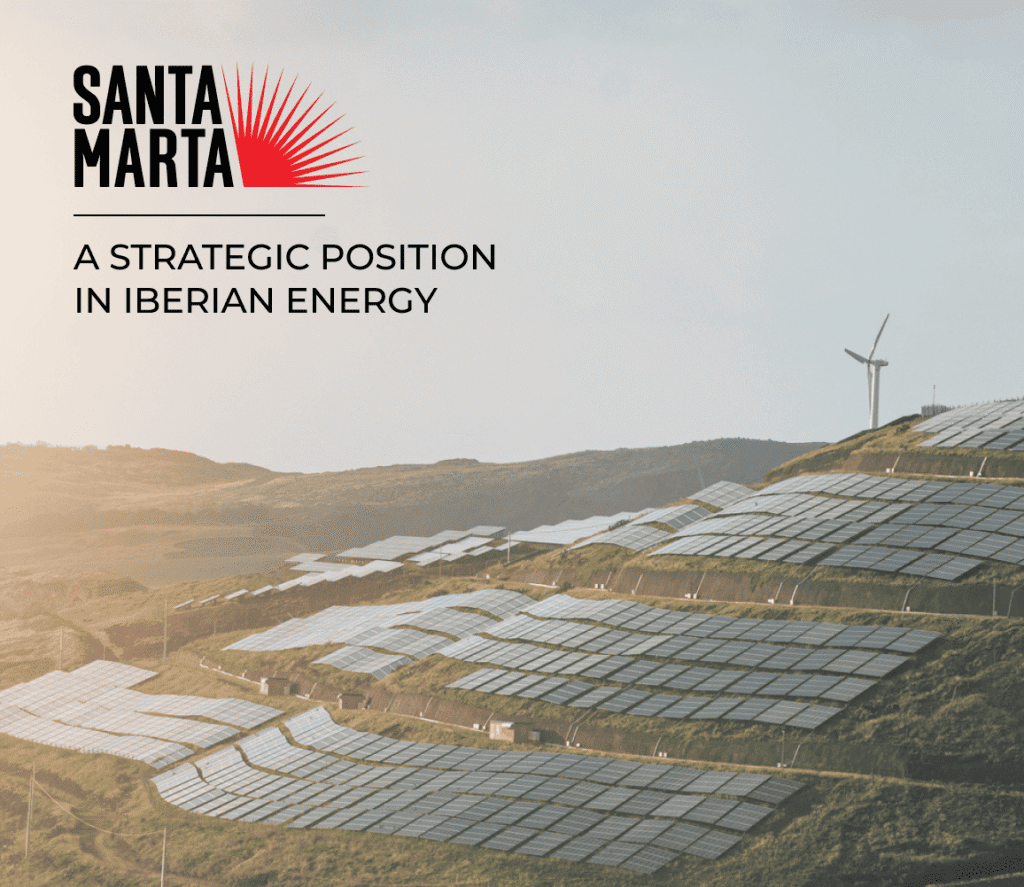
The most revealing number attached to a solar development is rarely its capacity. It is the calendar. Santa Marta, a solar asset among the projects Univere introduces, has been advancing through development since 2019. Seven years to take a site from early assessment toward Ready to Build status is not a sign of difficulty. In this sector it is close to normal, and understanding why is the beginning of understanding how renewable value is actually created.
Nobody builds a solar farm in a year. The timeline is the asset class, not an obstacle to it.
What happens across those years
A development timeline is a sequence of permissions, each one dependent on the last. The site has to be assessed for irradiance, for terrain, for proximity to a network that can take the output. Land rights have to be secured. Environmental assessment follows, then planning, then the grid application, which in most European markets now sits in a queue behind projects that may or may not ever be built.
None of this can be accelerated by capital alone. A regulator does not move faster because a project is well funded. The value in a development asset accrues to whoever is still there when the permissions arrive, which is a different quality from the one public markets reward.
Location as a fixed advantage
Some things about a solar asset can be changed. The technology can be upgraded, the layout revised, the storage sized differently. The one thing that cannot be changed is where it is. Irradiance, terrain, proximity to a substation, and the capacity of that substation are fixed at the moment the site is chosen.
This is why site selection carries such weight in Portuguese solar. The country holds some of the strongest irradiance in Europe, but the network is not uniformly able to absorb it, so two sites a short distance apart can have entirely different prospects. The broader Portuguese market case is set out in why Iberia now leads European solar energy investment.
Why the exit is designed before the asset is finished
Development-stage strategies are built around a handover. The work is to advance a project to the point where a different kind of buyer, typically institutional, will take it on. That buyer will underwrite an operating or construction-ready asset but not a planning application, which is exactly why the value step occurs at Ready to Build.
Designing toward that moment shapes every decision along the way. Consents are pursued in the order an eventual buyer will want to see them. Grid capacity is secured early because it is the item least able to be fixed later. The commercial arrangements are documented to a standard that will survive external diligence rather than internal comfort.
The name, and an important distinction
Readers who follow Univere content will recognise the name from a different context. The Santa Marta Bond was a Frankfurt-listed instrument, created and structured by a trusted third party, which paid investors 20% per annum and redeemed in full in December 2025, returning capital plus 60% across a three-year term. Investors introduced through Univere accessed that structure. It is cited as a completed result only, and past performance is not a guide to anything that follows.
The distinction matters. A redeemed bond is a closed record. A development asset is an ongoing project with its own risks and its own timeline. The two share a name and a market, not an outcome. What a completed cycle does and does not tell an investor is examined in how a completed solar bond delivered and then closed.
What the timeline asks of capital
Development assets suit capital that can wait and that does not need a daily price. They do not suit capital with a short horizon or a need for liquidity, because there is no market to sell into partway through a planning process. Capital committed here is at risk for the full term, projects can stall, and consents can be refused.
Univere introduces and distributes access to products created and structured by trusted third parties, and does not manage the underlying assets. Offering materials and project-level detail are shared with certified and self-certified investors after the qualification step.
UNIVERE INVESTMENT SOLUTIONS | Access. Without the Noise.
Professional access only. Not for public or retail audiences. Univere Investment Solutions Limited is not authorised or regulated by the Financial Conduct Authority, and communicates this content in reliance on the relevant financial promotion exemptions under FSMA 2000. This content does not constitute financial advice or a personal recommendation. Capital is at risk. Investments may be illiquid and difficult to realise. Past performance is not indicative of future results. Prospective investors should seek independent financial and legal advice before making any investment decision.