Germany built the largest fleet, yet the economics of European solar have moved south to Iberia.
For two decades, Germany was the face of European solar. It installed more panels than any other country on the continent, and by the end of 2025 its fleet had passed 117 GW, against roughly 50 GW in Spain. On installed capacity, the table has not changed. Yet anyone studying solar energy investment in Europe today is looking south, not at Berlin. The centre of gravity now sits in Iberia.
The crown was never about megawatts. It was about how much each panel actually earns, and who captures the value once the grid is full.
Germany’s lead was built on policy, not sunlight
Germany’s early lead came from a decision, not a climate. The Renewable Energy Sources Act of 2000 guaranteed generous feed-in tariffs, paying solar producers a fixed, above-market rate for every unit they sent to the grid. That guarantee, not the weather, drove the build-out.
German irradiance is modest, roughly 1,000 to 1,200 kWh per square metre each year, with the sunniest southern states near the top of that range and the north closer to the floor. Capital followed the tariff. When a government underwrites the price, the sun only has to show up enough to make the panel turn a profit at a rate someone else has set.
Iberia’s edge starts with the resource
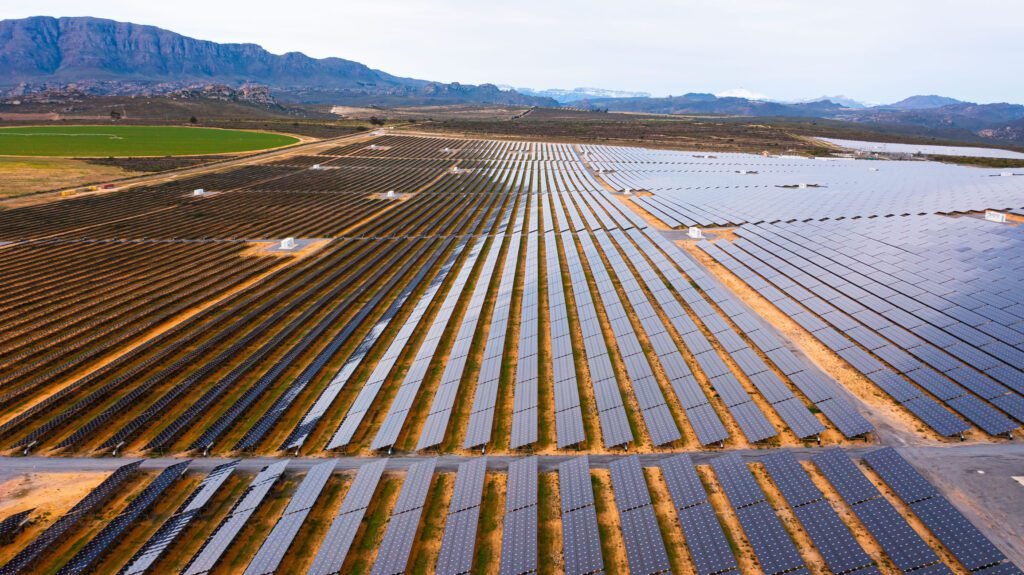
Move the same panel south and its output changes sharply. Spain and Portugal sit under roughly 1,700 kWh per square metre or more each year, against a German range nearer 1,000 to 1,200. The hardware is identical; the sun is not. The World Bank’s Global Solar Atlas puts an Iberian panel’s yield well above a German one’s. In practice that means one installed megawatt in the Algarve earns its keep far faster than the same megawatt outside Hamburg, before a single point of policy support enters the calculation.
What changed the economics of solar energy investment?
For years the German answer was the only one that worked: pay producers enough to make low sunlight bankable. Iberia rewrote that logic. As panel prices fell through the 2010s, the southern sun became valuable enough to stand on its own, without a state-guaranteed tariff propping up the return. The proof came at auction.
In July 2019, Portugal awarded solar contracts at a low of 14.76 euros per megawatt hour, then the cheapest solar ever contracted anywhere. A 2020 auction pushed the record lower still, to 11.14 euros per megawatt hour. Sunlight, not subsidy, now carried the economics. Returns stopped depending on what a regulator was willing to pay, and started depending on where the asset physically stood. What Portugal’s auctions are asking for now, and why the answer has changed, is covered in what Portugal’s 2026 auctions signal.
Why has battery storage become central to Iberian solar?
Solar now floods the Iberian grid at midday. Prices there can fall hard, and at times turn negative, which strips value from panels that can only sell power the moment they make it. Battery energy storage investment captures that cheap midday surplus and releases it when demand and prices climb back up.
The Iberian grid has become a study in too much of a good thing. In 2025 Spain added close to 9 GW of new solar, more than any other technology, and standalone solar began running into negative-price hours that cut directly into revenue. The grid itself cannot keep pace, with the great majority of network nodes reported as saturated and only a fraction of new grid-access requests approved.
Then the lights went out. On 28 April 2025, the entire Iberian Peninsula lost power for hours, an event investigators traced to a voltage-control failure and a cascade of disconnections, not to renewable generation in itself, as we set out in what the Iberian blackout revealed about the energy storage gap. What the blackout exposed was fragility.
Spain was running a vast solar fleet on a system with only a sliver of grid-scale battery storage in place at the time. Storage was the missing layer. It has since been climbing fast as operators and capital move to firm up the grid, part of the same shift toward pairing generation with storage that we describe in solar and storage: the new default.
The governance lesson for private capital
Strip away the geography and a clear principle remains for anyone allocating to alternative investments. The German story shows what happens when a return depends on policy: it lasts exactly as long as the policy does, and feed-in tariffs have been trimmed across Europe for years. The Iberian story shows the alternative.
When the return is built into the physical asset, the sunlight, the yield, the value of firming that output with storage, it rests on something a government cannot vote away. That distinction matters more than any single market. Returns that are designed into an asset behave differently from returns that are granted to it.
The shift is not abstract, and it has already produced finished results. The redeemed Santa Marta Bond is one example: a Frankfurt-listed renewable energy bond, built around this same Iberian solar story, that paid investors 20 per cent per annum and redeemed in full in December 2025. It returned capital plus the accumulated coupon. That is a completed track record and nothing more, and past performance is no promise of what comes next.
The wider point holds regardless. Strong private capital outcomes in energy rarely come down to timing; they come from putting money where the resource, the engineering, and the route to the grid all line up before the first panel goes in the ground.
For allocators weighing where European energy belongs in a wider portfolio, Iberia is less a tip than a teaching case. It shows that method comes before opportunity. The firms worth knowing are the ones that understood that before the map redrew itself.
Professional access only. Not for public or retail audiences. Univere Investment Solutions Limited is not authorised or regulated by the Financial Conduct Authority. This content does not constitute a financial promotion, financial advice, or an invitation or inducement to engage in investment activity.