Read separately, they were four news items in a busy week. Read together, they point in one direction, and it is not the one most people are still watching.
Early July 2026 delivered an unusual run of energy news from the Iberian Peninsula. A major cross-border power link was inaugurated between Portugal and Spain. Fresh Eurostat data confirmed Portugal as one of the most renewable-powered countries in Europe. Portugal set out its first national plan for energy storage. And across the EU, billions in public money moved into clean infrastructure. None of these made front pages outside the trade press. Together they describe the Iberian energy transition reaching a turning point that matters for anyone allocating capital over a multi-year horizon.
The generation question is closing. The grid and storage question is opening, and that is where the next decade of value sits.
A new link between Portugal and Spain
On 2 July 2026, a new electricity interconnection between northern Portugal and Galicia in north-west Spain was inaugurated. According to the European Commission, the project adds 1,000 MW of cross-border capacity, lifting the link to 4,200 MW from Spain to Portugal and 3,500 MW the other way. The Commission estimates it will integrate an additional 281 GWh of renewable electricity each year and cut CO2 emissions by around 113,000 tonnes annually. It was delivered by the two national grid operators, REN in Portugal and Red Electrica in Spain.
This matters more than a technical upgrade sounds. The Iberian Peninsula has some of the best solar and wind resources in Europe and some of the weakest connections to the rest of the continental grid. That mismatch is a large part of why cheap Iberian power has struggled to reach the markets that need it, and why so much renewable generation has sat waiting for a route out. Every megawatt of interconnection removes a slice of that bottleneck.
Portugal near the top of Europe, again
Two days earlier, new Eurostat figures reported by Euronews put the EU as a whole at 45.5% renewable electricity in the first quarter of 2026, up from 42.7% a year earlier. Denmark led at 90%. Portugal sat second across the entire bloc at 82.9%, drawing on hydropower, wind and a fast-growing solar base. Lithuania followed at 75.7%.
The same data carried a warning that is central to the investment case. During June’s heatwave, France and Germany fell back on gas to meet cooling demand, and their electricity bills rose by more than 700 million euros in a single week. The lesson repeats across every one of these stories. Renewables lower costs, but only storage makes those low costs reliable when the sun drops and demand climbs. Being near the top of the table in the afternoon is not the same as staying there through the evening.
Portugal writes storage into national policy
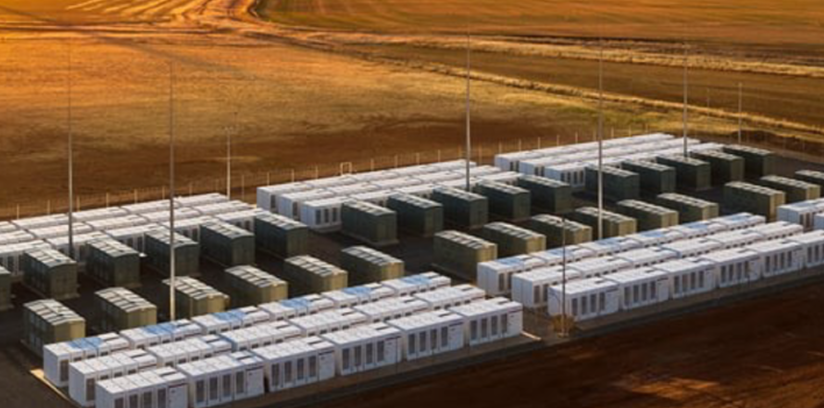
That gap is exactly what Portugal moved to address. The country set out its first National Energy Storage Strategy, and the detail matters more than the headline. As covered by Voice of Renewables, it includes an auction for standalone battery storage and further grid capacity reserved specifically for renewable projects paired with storage. That second element is the significant one. It is a government formally recognising that new solar should arrive with storage attached, rather than bolted on years later.
The framing from Lisbon was that the priority is no longer simply installing more renewable capacity, but making sure new capacity is properly integrated into the grid and delivers real value to the system. It is the same lesson Iberia learned the hard way, which we examined in what the Iberian blackout revealed about the energy storage gap. That single shift, from generation to integration, is the whole market’s direction of travel written into national policy.
Public capital is already moving
None of this is happening on promises alone. In the same period, the European Commission and the European Investment Bank released 2.5 billion euros to 51 clean energy projects across 11 member states, funded by carbon market revenues, as reported by Renewables Now. Renewable generation, grid modernisation, storage and efficiency all featured, and Portugal was among the recipients. It takes the total deployed through this mechanism past 23 billion euros since 2021. It is the same direction of travel behind the EU’s larger Mediterranean commitment, which we covered in why Europe is betting €25 billion on Mediterranean solar.
For private capital the signal is straightforward. This is not a speculative market that investors are early to and exposed in. Public money at this scale is being committed alongside private capital, into the same categories, in the same region. That does not remove risk, but it does say something about the direction the ground is moving in.
The pattern beneath the headlines
Step back and the four stories resolve into one. Spain has built so much solar without storage that some parks have lost value on days when midday power has nowhere to go. Portugal is auctioning storage to protect its renewable lead. A new interconnection has gone live between the two. And the EU is putting billions into the grid and the assets that balance it. The centre of gravity in energy investment has moved. It is no longer only in the panels and the turbines. Increasingly it sits in the assets that make a renewable grid actually work: storage, balancing capacity, interconnection, and grid connection rights. We made the same case a few weeks earlier in Europe just redrew its energy map in a single week, and this week only sharpened it.
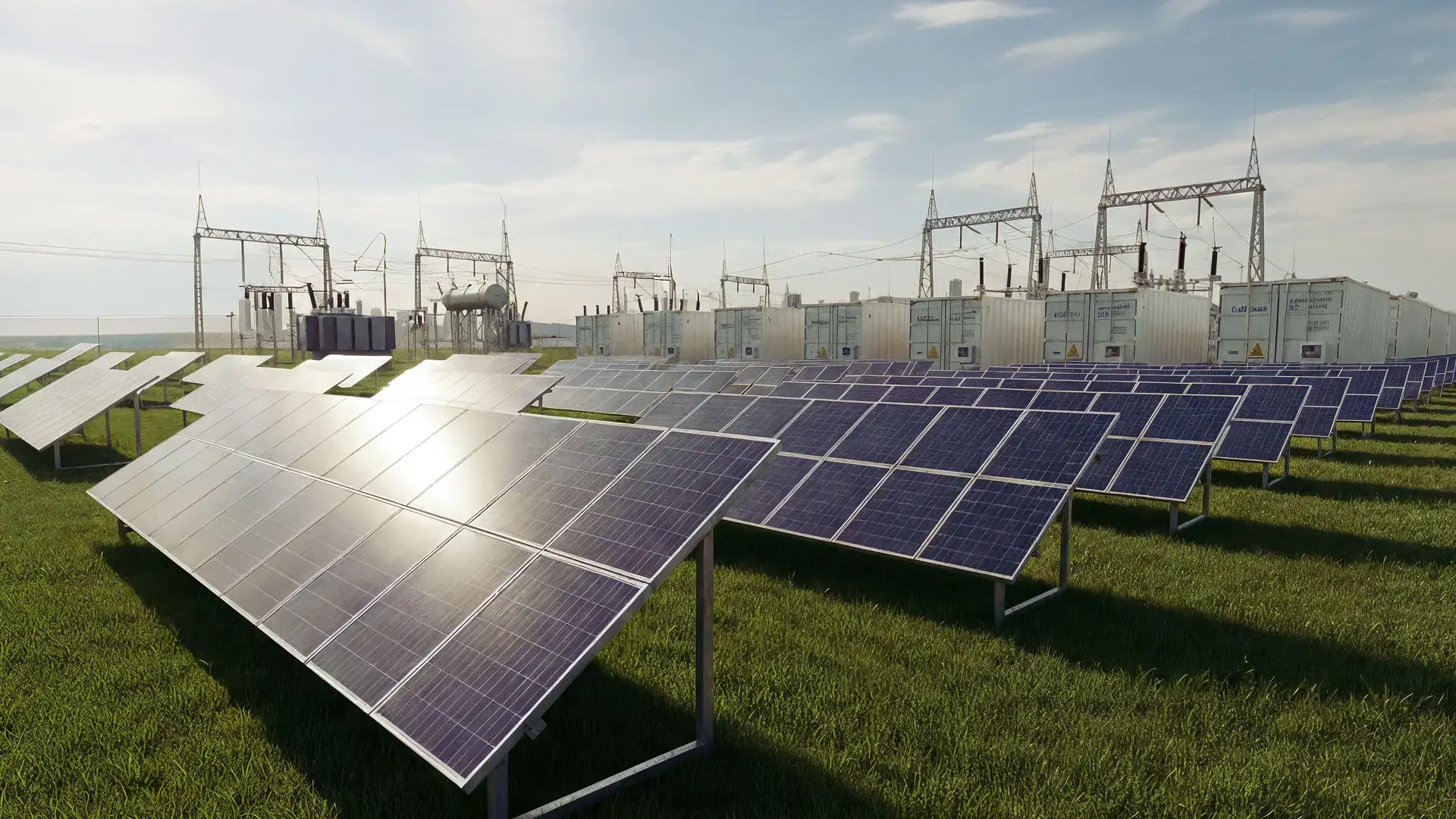
Generation has become the commoditised part of the system. The infrastructure that moves, stores and balances that generation is where the structural case is now building. This is the thesis behind the projects Univere introduces to qualifying investors, Solar45 and Baloico, both of which pair solar generation with battery storage rather than treating generation on its own. A solar asset without storage is exposed to precisely the problem Spain is living through. A solar asset paired with storage can turn that same midday glut into an advantage. We set out why storage strengthens precisely when volatility rises in from barrel risk to megawatt certainty.
What this means for capital
A disciplined reading has to keep its head. A strong week of news is not a guarantee of returns, infrastructure is slow, capital-intensive, and exposed to policy, permitting and execution risk, and a scheme announced is not an asset delivered. Univere does not create or structure these projects; it introduces qualifying investors to offerings created and structured by trusted third parties, and the quality of any single opportunity still rests on its own structure, security and governance.
What the week does provide is confirmation of direction. When the grid operators, the statisticians, the national government and the EU’s own capital all point the same way inside a few days, the structural case is not a forecast. It is visible on the ground. Univere Investment Solutions works at the layer where that direction, the quality of individual assets, and access to them intersect.
Sources: European Commission; Euronews / Eurostat; Renewables Now; Voice of Renewables.