In the space of a week, three developments combined to redraw the investment map for European renewable energy. Together, they do not just describe a trend. They describe a structural change in how capital is being directed toward clean energy infrastructure across the continent — and who benefits from being correctly positioned ahead of it.
The EU Commits €25 Billion to the Mediterranean Energy Corridor
The European Commission has launched the Trans-Mediterranean Renewable Energy and Clean Technology Cooperation initiative, known as T-MED. Announced during European Sustainable Energy Week by Commissioners Dubravka Šuica and Dan Jørgensen, the programme aims to mobilise up to €25 billion in investment by 2035, targeting renewable energy capacity, hydrogen development, clean technology manufacturing, and electricity grid modernisation across the Mediterranean region.
The European Commission has made more than €5 billion available in guarantee capacity through the European Fund for Sustainable Development Plus. That guarantee is designed to unlock private investment at scale by reducing risk for asset managers and institutional investors entering the region.
The figures are significant. T-MED targets 15 gigawatts of new renewable energy capacity across the Mediterranean by 2035. Commissioners noted that solar and wind energy production costs across many Mediterranean countries run 30 to 40 percent below comparable European levels, positioning the region as one of the most cost-competitive clean energy environments in the world.
The Commission has opened calls for expressions of interest from private investors, including commercial banks, asset managers, and impact funds. The first operational meeting of the T-MED Investment Platform is scheduled for October 2026. For investors with existing positions in Iberian and Mediterranean infrastructure, the programme represents substantial institutional tailwind arriving behind assets already under development.
The Grid Constraint That Makes Storage Critical
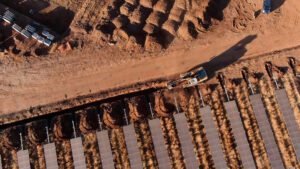
Rapid solar deployment across Southern and Southeast Europe is now running ahead of grid capacity. As Renewables Now reported this week, solar installation across the region is accelerating, but grid operators are facing real constraints in absorbing new generation. The bottleneck is not solar generation itself. It is the lack of storage and grid infrastructure capable of handling variable output at the scale now coming online.
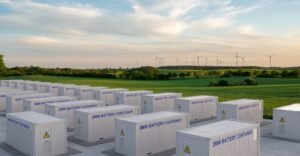
Battery energy storage systems have moved from a peripheral consideration to a structurally essential component of any viable solar infrastructure project. Without co-located or nearby storage, grid operators cannot guarantee dispatch, and generators face growing exposure to curtailment — the forced reduction of output when the grid cannot absorb supply.
For investors evaluating solar projects, this means that storage integration is not optional anymore. Projects positioned at high-capacity grid connection nodes, with storage assets already in place or contracted, carry meaningfully lower technical and commercial risk than those that are not. The combination of strong solar generation potential and an established grid connection with storage capacity is the differentiating factor in this environment.
Europe’s Key Imperative: Energy Independence
The policy context behind T-MED was framed directly by the think tank E3G in a briefing published this week. Europe has spent an additional €60 billion on fossil fuel imports since the energy crisis began. That is capital transferred outside the European economy that could instead have been directed toward domestic energy infrastructure, industrial capacity, and grid development.
The argument for clean energy independence is not primarily a climate argument in the current policy environment. It is an economic security argument. Volatile fossil fuel prices and international exposure have made the case for domestic renewable infrastructure in terms that governments, institutions, and increasingly private capital all accept. Commissioner Jørgensen was explicit at the T-MED launch: long-term energy security can only be achieved through clean energy systems, stronger interconnections, and more resilient networks.
The shift from policy aspiration to funded, structured programmes with defined investment vehicles is what distinguishes this moment. T-MED is not a statement of intent. It is a programme with capital, a governance structure, and an operational timeline.
Why Portugal Is Key to This Transition
Portugal is not incidental to the Mediterranean energy transition. It is one of its most advanced execution environments. The country already generates the majority of its electricity from renewable sources, with a grid infrastructure and regulatory environment that is further along than most comparable markets in the region.
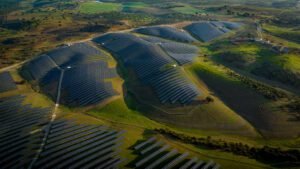
The Algarve, in particular, combines some of the highest solar energy levels in Europe with existing grid infrastructure capable of enabling large-scale generation. The 400kV transmission node at Tavira is among the highest-capacity connection points available to solar developers in the Iberian Peninsula.
Iberdrola’s parallel move to build a network of ten decentralised community solar installations across Portugal, sharing 1.7 million kilowatt hours with community enterprises and inhabitants, is a signal in the same direction. The direction in Portugal is clear. Capital from both public programmes and private developers is moving into solar infrastructure, and the grid and policy architecture is being built to support it.
What This Means for Private Investment
Three threads run through this week’s developments. First, European institutional capital is now being actively directed toward Mediterranean solar infrastructure at a scale and with a governance framework that reduces risk for private co-investors. Second, the technical bar for viable solar projects is rising: storage and grid position are now prerequisites, not enhancements. Third, Portugal — and specifically the Algarve — sits at the point where all three trends converge.
None of this removes the discipline that sound investment requires. Infrastructure is slow, capital-intensive, and exposed to policy, permitting, and execution risk. A programme announced is not a project delivered. The quality of the individual asset, its position in the capital structure, and the track record of the team executing it remain the primary variables.
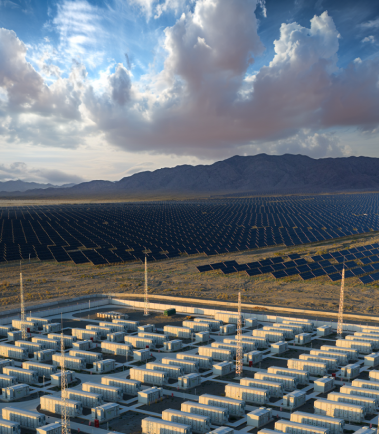
Univere has been positioned in this space through Solar45 — Renewable Energy Infrastructure, Algarve. The project combines a 200MW solar generation asset with 150MW/600MWh battery energy storage, connected to the Tavira 400kV grid node. It is the type of structure that the current policy environment was built around.
For context on how Univere evaluates and structures private investment opportunities of this kind, see our earlier analysis: Europe Redrew Its Energy Map Last Week. Here Is What It Means for Capital.
Professional access only. Not for public or retail audiences. Univere Investment Solutions Limited is not authorised or regulated by the Financial Conduct Authority. This content does not constitute a financial promotion, financial advice, or an invitation or inducement to engage in investment activity. Past performance is not indicative of future results. Capital is at risk.