| In brief
• Portugal approved a temporary 33% levy on 2026 oil and refining profits that exceed the 2024 to 2025 average by more than 20%. • Revenue supports households and investment that reduces fossil fuel dependence. • Renewables are outside the levy and gain relative policy visibility. • Risks remain: oil majors may compete harder in renewables, and future levies on renewable margins cannot be ruled out. |
Overview: What Portugal’s windfall tax does
Portugal introduces a 33% windfall tax on 2026 profits of oil & refining companies, applied to profits exceeding 20% above the 2024 to 2025 average. The measure is explicitly framed as:
- Funding social relief for high energy prices
- Accelerating investments that reduce fossil fuel dependency
- Shifting capital flows toward clean energy infrastructure
“Portugal’s windfall tax is not just a penalty on oil companies. It is a strategic rebalancing mechanism that strengthens the long-term competitive position of alternative energy companies.”
Policy context and structural signal
Policy backdrop
- Part of broader EU decarbonisation architecture: EU electricity market reform, RED III, national transition funding.
- Explicit narrative: fossil profits seen as crisis-driven and socially burdensome, renewables as socially beneficial and stabilising.
Signal for alternative energy
- Governments are willing to tax fossil “extraordinary” profits while supporting clean energy expansion.
- Renewables become the policy-preferred growth sector, with higher tolerance for support and lower tolerance for fossil windfalls.
Transmission channels: How the tax benefits alternative energy
-
Capital reallocation and funding
- Oil companies: reduced free cash flow in 2026, higher political risk premiums, more scrutiny on fossil capex.
- Renewables:
- Not subject to windfall taxation
- Benefit from increased public funding for clean energy infrastructure
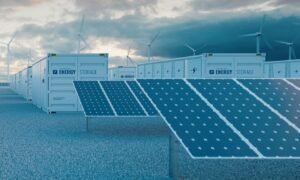
- Gain better access to grid capacity, especially for hybrid PV + storage.
“Part of the financial burden placed on oil companies will directly support the expansion of clean energy infrastructure.”
Outcome for alternative energy: Relative capital cost improves; more grant/CapEx support; higher probability of state-backed programmes for solar, wind, BESS, and hydrogen.
-
Regulatory visibility and project bankability
- Renewables operate under stable frameworks (PPAs, CfDs, regulated tariffs).
- Policy trend: greater visibility on decarbonisation targets and support schemes.
- This improves:
- Project bankability (lenders more comfortable with long-term cash flows)
- Financing conditions (lower cost of capital vs. fossil)
- Pipeline planning (developers can scale portfolios with more confidence).
“Renewables gain regulatory visibility, improving project bankability.”
Outcome: Higher NPV certainty, better debt terms, and stronger institutional investor appetite for green assets.
-
Social and political alignment
- Government frames tax as fairness: oil companies profited from geopolitical shocks (Iran war), households suffered.
- Renewables are positioned as:
- Socially beneficial
- Economically stabilising
- Strategically necessary
This strengthens:
- Public support for solar PV, wind, BESS, green hydrogen, hybridisation.
- Political willingness to fast-track permitting and protect renewables from retroactive measures.
Outcome: Lower non-financial risk (reputational, political), more durable policy backing.
Time-horizon analysis: Short, medium, long term
Short term (2026 to 2027)
- Oil companies:
- Earnings headwind from tax
- Likely slowdown in discretionary fossil investments
- Renewables:
- Less competition for grid capacity
- More government funding for clean energy programmes
- Stable regulatory frameworks and lower relative risk.
Net effect: Short-term acceleration of renewable project FIDs, especially in solar, onshore wind, and BESS.
Medium term (2027 to 2030)
- Oil majors may accelerate diversification into renewables to de-risk profit cycles.
- Partnerships and JVs between fossil and renewable players become more attractive.
- Storage developers benefit from increased system flexibility funding and grid modernisation.
Net effect: Capital inflows into renewables rise; competitive landscape broadens but sector scale and liquidity improve.
Long term (2030+)
- Portugal’s energy mix shifts structurally toward renewables.
- Fossil fuel assets face declining political tolerance and higher stranded-asset risk.
- Alternative energy companies enjoy long-duration growth visibility tied to national energy strategy.
Net effect: Renewables become core infrastructure assets with utility-like, policy-anchored growth.
Opportunity analysis for alternative energy
Strategic opportunities
- Higher public funding for clean energy infrastructure and flexibility solutions.
- Faster permitting under transition-aligned policies.
- Improved investor sentiment toward green assets and ESG-aligned strategies.
- M&A interest from oil companies seeking diversification into renewables.
- Better grid capacity access, especially for hybrid PV + BESS projects.
Competitive advantages
- No windfall tax exposure on current structures.
- Revenue streams (PPAs, CfDs) are more predictable than fossil margins.
- Strong ESG alignment improves access to institutional capital and lowers funding costs.
Risk analysis for alternative energy
This is where it gets interesting, because the upside is clear, but the second-order risks matter for positioning.
-
Competitive response from oil companies
- Oil majors may respond with aggressive renewable investments, using their balance sheets to scale quickly.
- This can:
- Compress returns in certain segments (e.g., utility-scale solar, offshore wind).
- Increase bidding competition for prime sites and grid capacity.
Risk: Margin pressure and crowding in mature technologies. Mitigation: Focus on niches (BESS, hybridisation, grid services, hydrogen) and differentiated capabilities rather than pure volume.
-
Policy and tax risk for renewables
- While renewables are currently insulated from windfall taxation, future taxes on renewable profits cannot be ruled out if margins surge.
- As renewables become dominant and profitable, governments may:
- Introduce sector-specific levies or clawbacks.
- Tighten support schemes (e.g., lower CfD strike prices, shorter PPA tenors).
Risk: Policy risk shifts from fossil to renewables over time. Mitigation: Structure portfolios with diversified jurisdictions, contract types, and technology exposure; avoid over-reliance on a single support regime.
-
Grid and infrastructure bottlenecks
- Even with policy support, grid bottlenecks may persist: connection delays, curtailment, limited hosting capacity.
- Rapid build-out of renewables can outpace grid reinforcement and flexibility investments.
Risk: Project delays, lower realised load factors, and revenue volatility. Mitigation: Prioritise projects with integrated storage (PV + BESS), strong grid studies, and active engagement with TSOs/DSOs.
-
Execution and scaling risk
- Accelerating pipelines while policy tailwinds are strong raises:
- Construction risk
- Supply-chain risk (equipment, EPC capacity)
- Operational risk (O&M, performance).
Risk: Cost overruns, delays, and underperformance erode the theoretical policy upside. Mitigation: Disciplined project selection, robust EPC/O&M partnerships, and conservative assumptions in financial models.
Bottom line
Portugal’s 33% windfall tax is best understood as a structural rebalancing tool, not a one-off fiscal grab. It:
- Weakens fossil fuel economics and political legitimacy,
- Strengthens the capital, regulatory, and social foundations of renewables,
- And creates a multi-horizon growth runway for alternative energy companies, especially those positioned in solar, wind, BESS, and hybrid projects.
Professional access only. Not for public or retail audiences. Univere Investment Solutions Limited is not authorised or regulated by the Financial Conduct Authority, and communicates this content in reliance on the relevant financial promotion exemptions under FSMA 2000. This content does not constitute financial advice or a personal recommendation. Capital is at risk. Investments may be illiquid and difficult to realise. Past performance is not indicative of future results. Prospective investors should seek independent financial and legal advice before making any investment decision.