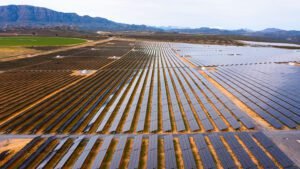

Targets are not only climate policy. For long dated capital, they are the difference between a clear horizon plus a guess.
Ahead of a meeting of EU energy ministers on 26 June 2026, the industry body WindEurope made a direct request: commit to a binding renewables target for 2040. Its argument, set out in a public statement, is that without such a target Europe risks stalling the investment momentum that has made renewables its strongest tool for energy security. For investors, the EU 2040 renewables target is less about climate ambition than about the policy certainty that long term capital depends on.
One line from WindEurope captures the whole investment case: capital flows to clarity.
Why Targets Move Money
The logic is simple. Infrastructure assets take years to build and decades to pay back. An investor committing to a renewable project today is implicitly betting that the framework supporting it will still be in place in fifteen years. A binding target provides that assurance. It tells developers, supply chains and financiers that demand will continue past 2030, which is precisely the horizon over which these assets are financed.
WindEurope’s own figures show what is at stake. Wind alone supplies around 20 percent of Europe’s electricity and supports more than 440,000 jobs across over 250 factories. The sector has invested more than 15 billion euros in new and upgraded factories in the last three years. As the body’s chief executive Tinne van der Straeten put it, once industrial capacity is lost it cannot easily be rebuilt.
The Funding Question Behind the Target
The target debate runs alongside a parallel argument about money. As Euronews reported, twelve EU member states have asked the European Commission to preserve and expand the Modernisation Fund beyond 2030. That fund, drawn from the bloc’s carbon market, has mobilised more than 57 billion euros since 2021 to help lower income countries invest in the transition. With a revision of the carbon market due in mid July, the question of how the transition is financed after 2030 is very much open.
Both debates point the same way. Each is about whether Europe will give investors a clear, funded, long term signal, or leave the picture after 2030 uncertain.
Portugal as the Working Example
Portugal shows what policy clarity produces on the ground. The country already generates a large share of its electricity from renewables, and its government keeps removing barriers to clean energy. Recent rules simplifying how citizens and communities produce and share their own renewable power, reported by PlusNews, are one more step in a consistent national direction. Durable, predictable policy has helped make Portugal one of Europe’s more investable energy markets, the thesis behind assets such as Solar45 and Baloiço.
What Investors Should Take From It
The honest position is that a target is not yet agreed, and political signals can shift. A binding 2040 target would strengthen the case for European renewable infrastructure. Its absence would leave more uncertainty in the years after 2030. Either way, the episode is a useful notice of what disciplined energy investors are really pricing: not this year’s headline, but the durability of the framework that supports an asset across its full life.
That same principle runs through the wider movement of capital we examine in Britain’s £100 billion clean energy milestone, where the destination of serious money is increasingly clear even where individual policies are still being argued over.
Univere Investment Solutions designs the access architecture through which qualified capital reaches private energy infrastructure in markets where policy direction is clear and durable. Capital does flow to clarity. The work is in finding where that clarity already exists.
Sources: WindEurope; Euronews; PlusNews.
Professional access only. Not for public or retail audiences. Univere Investment Solutions Limited is not authorised or regulated by the Financial Conduct Authority. This content does not constitute a financial promotion, financial advice, or an invitation or inducement to engage in investment activity. Past performance is not indicative of future results. Capital is at risk.