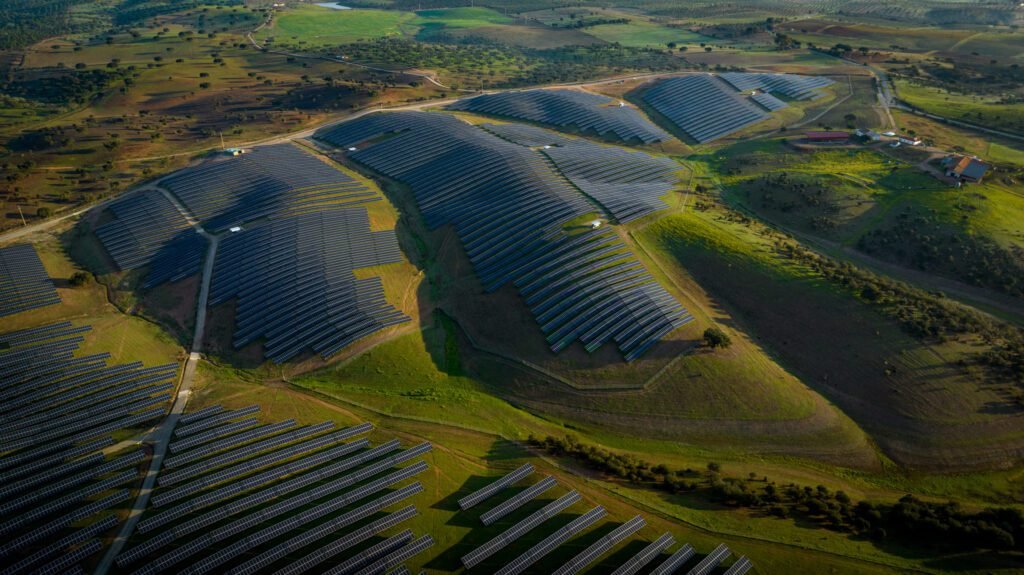
We followed a renewable bond from a Frankfurt listing to full redemption, and it changed how we read every deal since.
Solar energy investment is usually sold at the start. A brochure arrives, the projections read cleanly, capital is committed, and the public conversation tends to end right there. What rarely gets published is the other end of the cycle. Investors introduced through Univere accessed the Santa Marta Bond, a third-party structure Univere followed from the Frankfurt listing through every step to repayment. It paid investors 20% per annum. In December 2025 it redeemed in full, on schedule, with nothing left outstanding.
In private capital, a deal is proven at redemption, not at launch.
The discipline of designing for the exit
Anyone can originate. The harder craft is a product whose ending is defined before the first pound is drawn, and that design work sits with the third parties who structure these instruments. A defined-return instrument carries an obligation to pay at set intervals and to return capital at a fixed point, which fixes attention on cash flow, timing, and the quality of the underlying asset. Get the design wrong, and the exit becomes someone else’s problem at the worst possible time. Get it right, and redemption is quiet. Boring, in this corner of finance, is the highest compliment a deal can earn. How that defined structure works is set out in the case for defined returns.
What the full cycle taught us
Forecasts are confident by nature. They have to be, because nobody commits capital to a maybe. A completed cycle removes the confidence and replaces it with evidence, which is a different and far rarer thing. Three years is long enough for interest rates to move, for a government to rewrite its energy policy, for supply chains to seize, and for market sentiment to turn twice over. This bond paid through all of it. What was learned had nothing to do with how clever the projections looked. It was that the discipline built around them held: the covenants, the reporting, the asset selection, the unglamorous governance that turns a number on a page into a payment in an account. Over the three years, that meant capital returned in full, with a further 60% on top. The figure that matters arrived on time. Why a completed result outranks a forecast is examined in how a completed solar bond delivered and then closed.
Why does a completed cycle matter more than a forecast?
A completed cycle is proof, not prediction. It shows that a product paid as designed and returned capital on schedule, through real market conditions rather than modelled ones. A forecast describes what should happen. A redeemed result is the record of what actually did, logged over the full term. For investors weighing risk, delivery outweighs any projection.
This is why the redeemed result sits at the centre of how the renewable sector reads now. Plenty of solar projects pencil out beautifully on a spreadsheet. Fewer survive contact with grid delays, permitting queues, and the gap between a signed agreement and a working asset. A track record promises nothing about the next product. It shows only that one has been built before, taken the full distance, with a clear view of where the hard parts hide.
Where solar economics are heading
The reason solar holds professional attention has little to do with sentiment. It is share. The International Energy Agency reported that the world added 553 gigawatts of new solar capacity in 2024, taking solar to roughly 7% of global electricity generation, a record. Inside the alternative investments space, very few themes have scaled this quickly or this consistently. The harder question is what happens after dark. Generation on its own leaves money on the table, because a unit of power at noon is worth less than the same unit at seven in the evening. This is where battery energy storage investment enters the conversation. Storage firms intermittent output and lets an asset sell into the hours that pay best, which is why generation and storage are now planned side by side. The same agency has called battery storage the fastest-growing power technology in the world. Why the pairing has become standard is set out in solar and storage: the new default.
What changed in how these deals are read
A full cycle leaves a residue, and it shows up in process rather than slogans. The exit questions come first. Governance and reporting are weighted as heavily as headline yield, because the first decides whether the second ever arrives. And where an asset depends on selling power at the right hour, whether storage belongs in the design from the start is a hard question asked early. None of this promises the next result. Capital is always at risk in this work, and any honest operator says so without flinching. What a completed cycle buys is not certainty. It is the right to be taken seriously when describing how the next one is built.
The investment industry is good at beginnings. It is far less comfortable reporting the end, especially when that end is simply that everyone got paid and went home. That ordinariness is the point. A product that lists, performs, and redeems on schedule is not a headline. It is a habit worth keeping, and it is the only foundation on which the next one earns its hearing. That approach continues through the projects Univere introduces, including Solar45 and Baloico.
Univere Investment Solutions works with regulated intermediaries, family offices, and qualified professional investors who think about renewable infrastructure the same way.
Professional access only. Not for public or retail audiences. Univere Investment Solutions Limited is not authorised or regulated by the Financial Conduct Authority. This content does not constitute a financial promotion, financial advice, or an invitation or inducement to engage in investment activity. Past performance is not indicative of future results. Capital is at risk.