
The auction tool that once set world-record solar prices has turned to a harder problem, keeping a green grid stable.
Portugal reached a renewable electricity share of around 80% in the early months of 2026, a level confirmed across national and European data. That number would have read as a stretch target a decade ago. It now describes an ordinary week. For anyone weighing renewable energy investment in Iberia, the more useful question is not how much green power the country can build, but what it now struggles to do with it.
Auctions answer that question better than targets do. A government tender shows what investors actually pay for, where they price risk, and which part of the system they think needs solving next. Portugal has held competitive renewable auctions since 2019, when the contest was about the price of new solar. The 2026 round is about something else entirely.
When a country stops auctioning generation and starts auctioning flexibility, it is telling you where the constraint has moved.
From record prices to a different problem
Portugal’s first solar auction, back in 2019, became briefly famous when one winning bid cleared at just 14.76 euros per megawatt hour. Nowhere had contracted solar lower. Rounds in 2020 and 2022 drove prices down further still, with the 2020 auction setting a new world record at 11.14 euros per megawatt hour, and some floating-solar bids turning negative as developers competed for the grid connection itself, not the subsidy.
Cheap solar, it turned out, was no longer the hard part.
The hard part arrived on 28 April 2025. A cascading failure that began in Spain blacked out much of the Iberian peninsula, and exposed how a grid running on weather-driven power can lose its footing in seconds. The investigation by European grid operators, covered in our piece on what the Iberian blackout revealed about the energy storage gap, traced the failure to voltage control and system resilience, not to renewable generation itself. Generation was never the weak link.
The weak link was balance, as the investigation coordinated through ENTSO-E, the European network of grid operators, went on to confirm.
What does Portugal’s 2026 auction calendar actually show?
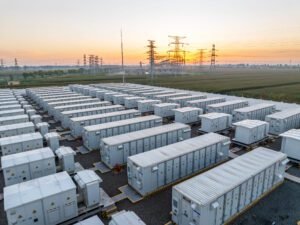
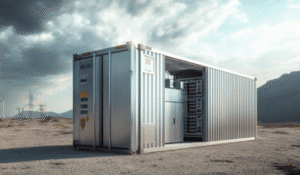
It shows a shift in priorities. The headline event of 2026 is not a solar tender but a 750 megawatt battery storage auction, launched alongside a public consultation on a new National Energy Storage Strategy. The market is being asked to bid on flexibility, not generation.
That auction has a longer backstory. Portugal first promised a storage tender of this size as part of a grid-resilience package announced in the months after the blackout. That date came and went. The tender now lands in the second half of 2026, roughly six months later than first set out, and it arrives bundled with a strategy document still open for consultation.
Why the delay matters more than the date
A six-month slip is not, on its own, alarming. Energy procurement runs late everywhere, and a consultation attached to a first-of-its-kind auction is a sign of care rather than disarray. What the timing reveals is where the pressure now sits. Portugal is not short of solar, and it has no shortage of ambition either, with a 2030 plan that points to over 20 gigawatts of photovoltaic capacity.
What it lacks is the means to move that power through time. Solar produces in the middle of the day, in vast quantity, exactly when demand is lowest and prices are weakest. By evening, the sun is gone and the grid leans on whatever can respond. Storage closes that gap. Until it is built at scale, every extra gigawatt of midday solar makes the balancing problem harder, not easier.
Read the design, not just the result
The design of the storage auction tells its own story. Successful bidders earn a fixed annual payment in exchange for keeping their batteries available to the grid at short notice, while the system operator retains the right to decide when they actually run. Availability is the product, not output.
The design choice is telling in itself. A country anxious about cheap power would auction generation and reward the lowest price per megawatt, the model Portugal ran to such effect a few years ago. A country anxious about reliability auctions availability instead, and pays for the assurance that capacity sits ready when the weather turns.
For now, Portugal is plainly the second kind.
What this means for renewable energy investment
For an allocator weighing solar energy investment, the read-through is less about panels and more about timing. The economics are moving. Value is shifting away from simply building generation and towards firming it, from producing electrons cheaply to making them dependable when the system needs them most, the same migration of value we traced in four days in Iberian energy that told one story.
This is where private capital tends to do its most useful work. Listed markets price the obvious quickly, the large utility and the well-covered developer, while the harder, less liquid pieces of the system attract far less competition for capital. Flexibility sits in that second group. It is exactly the kind of theme that suits patient, selective capital rather than crowded public allocation, and it sits naturally within a broader book of alternative investments. It is also the design principle behind the projects Univere introduces, such as Solar45 and Baloico, where storage is part of the asset rather than an afterthought.
There is precedent here, not just theory. The Santa Marta Bond, a Frankfurt-listed instrument that financed Portuguese solar, paid 20% per annum and redeemed in full in December 2025. It has since matured and closed. Over the full three-year term, that came to 160% of capital returned in total, the original investment back plus 60% on top of it.
Past performance settles nothing about the future, and a redeemed bond is history, not a forecast. The point it makes is narrower. Portuguese renewables have delivered for earlier investors, and the auction calendar now points to where the next phase of that work, firming and flexibility, is most needed.
Auctions are a country thinking aloud about its constraints. Portugal’s 2026 round says the building phase of the energy transition is, in one sense, the easy part now behind it, and the integration phase is the work that pays attention from here. Flexibility is the sequel, and it is where the discipline now lies.
Univere studies these shifts as a matter of routine, the better to understand where private capital fits as a market re-prioritises. The reading comes first.
Professional access only. Not for public or retail audiences. Univere Investment Solutions Limited is not authorised or regulated by the Financial Conduct Authority. This content does not constitute a financial promotion, financial advice, or an invitation or inducement to engage in investment activity.